Nest
Key takeaways
- The mental load is the invisible work of planning, remembering and noticing.
- It falls on one person when information lives in their head.
- Move it into a shared system everyone can see.
- Share ownership of whole areas, not just individual jobs.
Ask who in your house knows when the next school break starts, what size shoes the children are in, and whether there is enough dish soap. Often it is one person. That knowledge, and the constant background planning that comes with it, is the mental load.
What is the mental load?
The mental load, sometimes called invisible labour or cognitive labour, is the work of managing a household rather than just doing tasks in it. It includes remembering, planning, anticipating needs, making decisions and keeping track of what everyone else has to do.
Doing the shopping is a task. Noticing that you are running low, writing the list, checking the meal plan and remembering that one child has a packed lunch on Thursday is the mental load behind it.
Why it usually falls on one person
The mental load concentrates wherever information is stored. If one person keeps the calendar, writes the lists and receives the school emails, everyone else naturally asks them. Over time they become the household’s project manager, often without anyone deciding it.
Asking for help does not fully fix this, because the person asking still has to notice what needs doing and delegate it. That noticing and delegating is the load.
Signs the mental load is unbalanced in your home
- One person is asked “where is…?” and “when is…?” many times a day.
- Things get done, but only after one person reminds everyone.
- One person feels tired even on days when they did fewer chores.
- Vacations and birthdays are planned by the same person every time.
How to share the mental load: six practical steps
1. Get it out of one person’s head
Write everything down in a shared place: appointments, upcoming events, shopping needs, jobs and important information. Once it is visible, everyone can see what needs doing without being told.
2. Use one shared system, not one person’s phone
A family calendar, shopping list and task list that live on everyone’s phone make the work visible to all. Nobody has to be the messenger.
3. Share ownership of whole areas
Instead of handing out single tasks, give each person complete ownership of an area. For example, one person owns meals: planning, shopping list and cooking schedule. Another owns the children’s school admin. Ownership includes the noticing and remembering, not just the doing.
4. Hold a weekly planning check in
Spend 15 minutes together each week looking at the calendar, the meal plan and the task list. Decisions get shared, and nobody plans the week alone. Our guide on how to organize family life includes a simple agenda.
5. Post news where everyone can see it
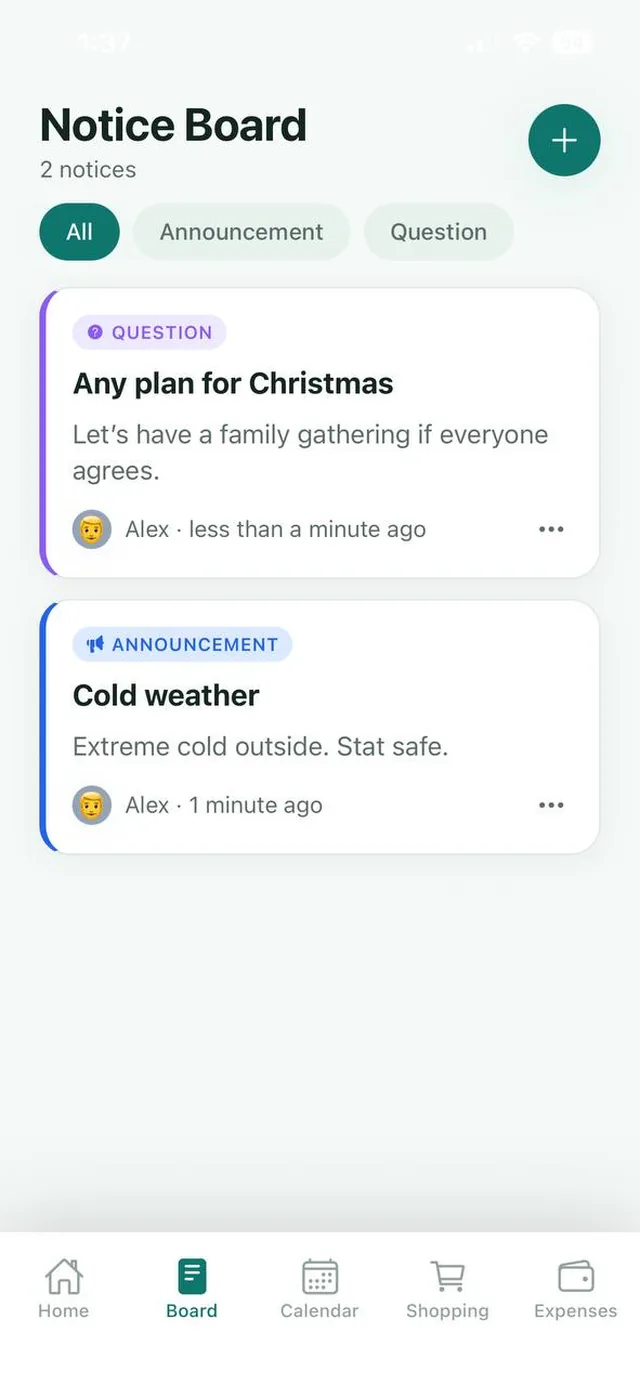
Important updates should not depend on one person passing them on. A family notice board lets anyone post announcements, reminders and questions for the whole family.
6. Let children take on age appropriate ownership
Older children can add their own events to the calendar, put items on the shopping list and tick off their own chores. It lightens the load and builds independence.
Talking about the mental load as a family
Start with curiosity rather than blame. List everything that keeps the house running, including the invisible planning, and look at who currently holds each part. Then agree who will own what, and put it all in a shared system so it stays fair.
The bottom line
The mental load becomes lighter the moment it becomes visible. Move your family’s plans, lists and jobs into one shared place, share ownership of whole areas, and check in together each week.
Share the money load, too
Money is invisible work: remembering the bill, checking the balance, chasing who paid what. In many households one person carries all of it.
- Bills with a due date send a reminder at 9 am to the whole family, so remembering is no longer one person’s job (Premium).
- Budgets are shared. Anyone in the family can see and change them, and everyone is told at 80%.
- Balances do the sums: who is owed, who owes and the fewest payments to settle up.
- Everything is added by hand, so there is no bank login for one person to manage.
See how family budgets work in Nest.
Frequently asked questions
What is the mental load in a family?
The mental load is the invisible work of managing a household: remembering, planning, noticing what needs doing and keeping track of everyone’s needs and schedules.
How do you share the mental load with a partner?
Write everything down in a shared system both of you can see, give each person ownership of whole areas such as meals or school admin, and plan the week together in a short weekly check in.
Can an app help with the mental load?
Yes. A shared family organizer app like Nest moves plans, lists and tasks out of one person’s head and onto everyone’s phone, so the whole family can see what needs doing.